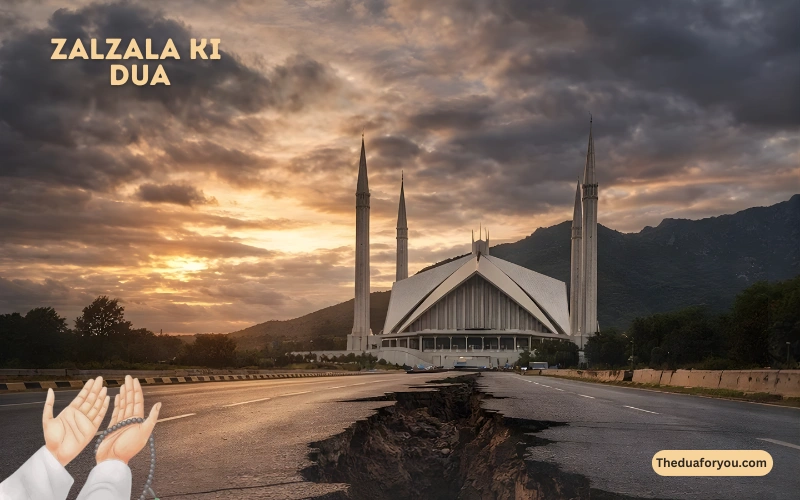
Zalzala ki dua becomes a heartfelt need when the ground shakes and fear grips the heart. Earthquakes are among the signs of Allah’s power, and the Qur’an itself dedicates Surah Az-Zalzalah to describing the Day when the earth will shake violently.
In moments of sudden disaster, people search for zalzala ki dua in Arabic, hoping to find words of protection. Others look for zalzala ki dua in Urdu to understand the meaning clearly. The real intention behind these searches is simple: protection, mercy, and safety.
Islam does not leave believers helpless during calamities. The Prophet Muhammad ﷺ taught specific supplications for fear, trials, and natural disasters. These are preserved and spiritually powerful.
Zalzala Ki Dua in Arabic (For Fear & Calamity)
Dua During Fear
Arabic:
اللَّهُمَّ اسْتُرْ عَوْرَاتِي وَآمِنْ رَوْعَاتِي
Transliteration:
Allahumma-stur ‘awrāti wa āmin raw‘āti
Meaning:
“O Allah, conceal my weaknesses and grant me safety from my fears.”
📖 Source: Sunan Abu Dawood
This is one of the most powerful forms of zalzala ki dua, because earthquakes create sudden fear.
Dua for Protection from Trials & Calamities
Arabic:
اللَّهُمَّ إِنِّي أَعُوذُ بِكَ مِنَ الْبَلَاءِ، وَدَرَكِ الشَّقَاءِ، وَسُوءِ الْقَضَاءِ، وَشَمَاتَةِ الْأَعْدَاءِ
Transliteration:
Allahumma inni a‘udhu bika minal-balā’i, wa darakish-shaqā’i, wa sū’il-qadā’i, wa shamātatil-a‘dā’
Meaning:
“O Allah, I seek refuge in You from severe trials, misery, bad destiny, and the rejoicing of enemies.”
📖 Source: Sahih al-Bukhari & Sahih Muslim
This supplication is often recited as earthquake zalzala ki dua, as earthquakes fall under severe trials (balā’).
Dua for Protection from Sudden Calamity
Arabic:
اللَّهُمَّ إِنِّي أَعُوذُ بِكَ مِنْ زَوَالِ نِعْمَتِكَ، وَتَحَوُّلِ عَافِيَتِكَ، وَفُجَاءَةِ نِقْمَتِكَ، وَجَمِيعِ سَخَطِكَ
Transliteration:
Allahumma inni a‘udhu bika min zawāli ni‘matik, wa tahawwuli ‘āfiyatik, wa fujā’ati niqmatik, wa jamī‘i sakhatik
Meaning:
“O Allah, I seek refuge in You from the removal of Your blessings, the change of Your protection, sudden punishment, and all Your anger.”
📖 Source: Sahih Muslim
The phrase “fujā’ati niqmatik” (sudden punishment) is especially relevant during earthquakes.
Zalzala Ki Dua in Urdu
When people search for zalzala ki dua in Urdu, they seek clarity of meaning. Below is the Urdu explanation of the above duas:
اللهم استر عوراتي وآمن روعاتي
“اے اللہ! میری کمزوریوں کو چھپا دے اور میرے خوف کو امن میں بدل دے۔”
اللَّهُمَّ إِنِّي أَعُوذُ بِكَ مِنَ الْبَلَاءِ، وَدَرَكِ الشَّقَاءِ، وَسُوءِ الْقَضَاءِ، وَشَمَاتَةِ الْأَعْدَاءِ
“اے اللہ! میں سخت آزمائش، بدبختی، بری تقدیر اور دشمنوں کی خوشی سے تیری پناہ مانگتا ہوں۔”
اللَّهُمَّ إِنِّي أَعُوذُ بِكَ مِنْ زَوَالِ نِعْمَتِكَ، وَتَحَوُّلِ عَافِيَتِكَ، وَفُجَاءَةِ نِقْمَتِكَ، وَجَمِيعِ سَخَطِكَ
“اے اللہ! میں تیری نعمتوں کے زوال، عافیت کے بدل جانے، اچانک عذاب اور تیرے غضب سے پناہ مانگتا ہوں۔”
Read Also: Jazakallah Khair Meaning in Hindi
What to Do During an Earthquake (Islamic Perspective)
Islam encourages both spiritual response and practical responsibility. The Prophet ﷺ emphasized reliance upon Allah alongside taking necessary means.
Immediate Spiritual Response
During sudden fear:
-
Say Allahu Akbar
-
Recite Istighfar (Astaghfirullah)
-
Make authentic duas for protection
-
Turn to Allah with humility
The Prophet ﷺ taught that during fear, one should say:
اللَّهُمَّ اسْتُرْ عَوْرَاتِي وَآمِنْ رَوْعَاتِي
“O Allah, conceal my faults and grant me safety from my fears.”
(Sunan Abu Dawood)
This dua is appropriate because earthquakes create sudden fear and vulnerability.
After Immediate Danger Passes
Scholars recommend:
-
Performing voluntary Salah
-
Making sincere repentance
-
Giving charity (if capable)
-
Reflecting on one’s actions and improving conduct
Ibn Taymiyyah (رحمه الله) mentioned that calamities are times for turning back to Allah, not panic or superstition.
Importantly, Islam does not teach fatalism. During earthquakes, one must:
-
Move to a safe area
-
Protect head and neck
-
Follow emergency instructions
Practical & Safety Balance (Faith + Action)
Islam establishes a clear principle:
Tawakkul (trust in Allah) requires taking means.
The Prophet ﷺ said:
“Tie your camel and then trust in Allah.” (Tirmidhi – Hasan)
This principle applies directly to earthquakes.
Balanced Approach
Spiritual Action:
-
Make dua
-
Say Astaghfirullah
-
Remain patient
Physical Action:
-
Follow “Drop, Cover, and Hold On” guidelines
-
Avoid elevators
-
Move to open spaces
-
Follow official safety authorities
Recent global disaster research (United Nations Office for Disaster Risk Reduction, 2025 update) emphasizes that calm mental focus reduces injury risk significantly. Structured recitation or controlled breathing lowers panic response — something naturally achieved through dhikr.
Common Misconceptions About Earthquake Zalzala Ki Dua
Misconception: There is a secret or hidden earthquake dua.
Reality: No authentic narration supports this claim. Any specific “special earthquake dua” without evidence should be avoided.
Misconception: Earthquakes always mean divine punishment.
Reality: Islamic scholarship clarifies that calamities may be:
-
A test
-
A reminder
-
A means of purification
-
Part of natural divine decree
The Prophet ﷺ stated that trials can elevate believers’ ranks (Sahih Muslim).
Misconception: Reciting Surah Az-Zalzalah stops earthquakes.
Reality: There is no authentic evidence that reciting Surah Az-Zalzalah prevents or stops earthquakes. One may recite Qur’an for general blessings, but specific claims require proof.
Misconception: Earthquakes are purely random.
Islam teaches that everything happens by Allah’s decree (Qadar), yet natural physical causes exist. Recognizing scientific explanations does not contradict belief in divine will.
Scholars consistently warn against spreading unauthenticated religious claims during crises.
Deeper Reflection: Spiritual Meaning of Earthquakes
The Qur’an describes a greater shaking in Surah Az-Zalzalah — the earthquake of the Day of Judgment.
Earthly earthquakes serve as reminders of:
-
Human fragility
-
The temporary nature of worldly life
-
Accountability before Allah
Calamities can serve different purposes:
-
Test of patience
-
Reminder to return to Allah
-
Elevation of spiritual rank
-
Expiation of sins
The Prophet ﷺ said:
“No fatigue, illness, anxiety, sorrow, harm, or distress befalls a Muslim—even the prick of a thorn—except that Allah expiates some of his sins because of it.” (Bukhari & Muslim)
A believer’s response should be:
-
Humility, not blame
-
Repentance, not accusation
-
Compassion for victims
-
Practical assistance and charity
Conclusion
Zalzala ki dua is not about memorizing a magical phrase. It is about returning to Allah sincerely when the earth shakes beneath our feet.
In moments of fear, Reliable words from the Sunnah become anchors of stability. Whether you search for zalzala ki dua in Arabic, want its meaning in Urdu, or seek the correct earthquake zalzala ki dua, remember:
The strongest protection is sincere tawakkul (trust in Allah) combined with responsible action.
When the ground shakes, let your heart stand firm.
And let your tongue say:
اللَّهُمَّ اسْتُرْ عَوْرَاتِي وَآمِنْ رَوْعَاتِي
? FAQs About Zalzala Ki Dua
1. Is there a specific zalzala ki dua mentioned in hadith?
No specific exclusive dua for earthquakes exists. Authentic duas for fear and calamity should be recited.
2. Can I recite Surah Zalzalah during earthquake?
Yes, you may recite any Qur’an, but it is not specifically prescribed for stopping earthquakes.
3. What is the best earthquake zalzala ki dua?
The most authentic is:
اللَّهُمَّ إِنِّي أَعُوذُ بِكَ مِنَ الْبَلَاءِ، وَدَرَكِ الشَّقَاءِ، وَسُوءِ الْقَضَاءِ، وَشَمَاتَةِ الْأَعْدَاءِ
4. Should we pray after earthquake?
Yes. Scholars recommend voluntary Salah and repentance.
5. Can children read zalzala ki dua?
Yes, especially short duas like:
اللَّهُمَّ اسْتُرْ عَوْرَاتِي وَآمِنْ رَوْعَاتِي