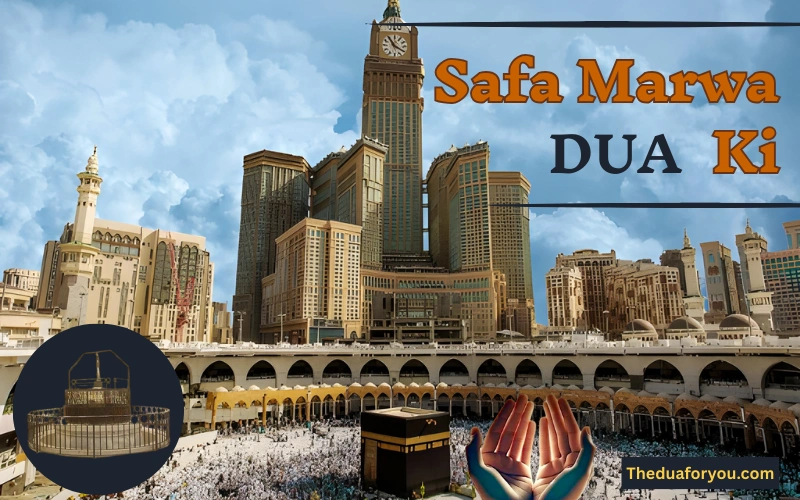
The Sa’i ritual, a key part of Hajj and Umrah, is a beautiful walk between the hills of Safa and Marwa in Makkah. This journey reflects the story of Hajar, the wife of Prophet Ibrahim (peace be upon them), who ran between these hills searching for water for her son, Ismail. Her faith led to the miracle of the Zamzam spring. Today, when pilgrims perform Sa’i, they recite the Safa Marwa ki dua, a special prayer that brings them closer to Allah. This dua, said at the peaks of Safa and Marwa, turns each step into a moment of devotion.
In this guide, we’ll explain the Safa Marwa ki dua in simple words, share its meaning, and cover everything you need to know about the Sa’i ritual. Whether you’re preparing for Hajj, Umrah, or just curious, this article is written in easy, friendly language to help you feel connected to this sacred act.
Why Is Sa’i So Special?
Sa’i means “to strive” in Arabic, and it’s a reminder of Hajar’s trust in Allah during tough times. The Quran honors this act in Surah Al-Baqarah (2:158): “Indeed, Safa and Marwah are among the symbols of Allah. So whoever makes Hajj to the House or performs Umrah—there is no blame upon him for walking between them.”
This verse shows that walking between Safa and Marwa is a sacred act, not just a physical walk. It’s a chance to reflect, pray, and seek Allah’s mercy. The Safa Marwa dua adds a spiritual spark, making every step a conversation with the Divine.
The Story Behind Sa’i
Imagine being in a desert with no water, only your baby by your side. That’s what Hajar faced when Prophet Ibrahim left her and Ismail in Makkah by Allah’s command. She ran between Safa and Marwa seven times, praying for help. Her faith moved Allah to send the angel Jibril, who caused the Zamzam spring to burst forth. Pilgrims today walk this path to honor her trust and to seek Allah’s blessings through the Safa Marwa ki dua.
Disclaimer:
This article on the Safa Marwa ki dua is for educational purposes, based on authentic sources like Sahih Bukhari and Sahih Muslim. For personalized guidance, consult a qualified Islamic scholar. The author is not liable for any errors or misinterpretations.
How to Perform Sa’i: A Simple Guide
Sa’i is done after circling the Ka’bah (Tawaf). Here’s how to do it step-by-step:
- Start at Safa: Climb the hill of Safa, face the Ka’bah, and make your intention for Sa’i.
- Recite the Safa Marwa Dua: Say the special prayer (shared below) and add your personal supplications.
- Walk to Marwa: Move toward Marwa, about 394 meters away. Men should jog lightly between the green lights to remember Hajar’s urgency.
- Repeat at Marwa: Climb Marwa, face the Ka’bah, and recite the dua again.
- Complete Seven Trips: Walk back and forth, starting at Safa and ending at Marwa, for a total of seven laps.
Tips:
- Women and elderly pilgrims can use ramps or the ground floor for comfort.
- Keep count of your laps to avoid mistakes.
- Stay focused on prayer to make your Sa’i meaningful.
The Complete Safa Marwa Ki Dua
The Safa Marwa ki dua is a Sunnah prayer from the Prophet Muhammad (peace be upon him), found in authentic sources like Sahih Bukhari and Muslim. You say it when you reach Safa and Marwa.
Arabic Text:
إِنَّ الصَّفَا وَالْمَرْوَةَ مِنْ شَعَائِرِ اللَّهِ أَبْدَأُ بِمَا بَدَأَ اللَّهُ بِهِ
اللَّهُ أَكْبَرُ اللَّهُ أَكْبَرُ اللَّهُ أَكْبَرُ
لَا إِلَهَ إِلَّا اللَّهُ وَحْدَهُ لَا شَرِيكَ لَهُ لَهُ الْمُلْكُ وَلَهُ الْحَمْدُ وَهُوَ عَلَى كُلِّ شَيْءٍ قَدِيرٌ
لَا إِلَهَ إِلَّا اللَّهُ وَحْدَهُ أَنْجَانَا بِنِعْمَتِهِ وَعَلَى الْكَافِرِينَ فَتْحُهُ
Transliteration:
Innaṣ-Ṣafā wa ‘l-Marwata min sha‘ā’irillāh. Abda’u bimā bada’allāhu bih.
Allāhu akbar, Allāhu akbar, Allāhu akbar.
Lā ilāha illallāhu waḥdahu lā sharīka lahu, lahu ’l-mulku wa lahu ’l-ḥamdu, wa huwa ‘alā kulli shay’in qadīr.
Lā ilāha illallāhu waḥdahu, anjānā bi-ni‘matihi wa ‘alā ’l-kuffāri faṭḥu-hu.
English Translation:
“Surely, Safa and Marwah are among the symbols of Allah. I begin with what Allah began.
Allah is the Greatest, Allah is the Greatest, Allah is the Greatest.
There is no god but Allah alone, with no partner. To Him belongs dominion and praise, and He is over all things competent.
There is no god but Allah alone. He fulfilled His promise, aided His servant, and alone defeated the allies (of disbelief).”
What to Do Next?
After this dua, raise your hands and make personal prayers for health, family, forgiveness, or anything dear to you. Allah listens to every sincere word.
Safa Marwa Ki Dua in Different Languages
To make it easy for everyone, here’s the Safa Marwa ki dua in popular languages:
In Urdu:
بِلَاشُبْہَ صَفَا وَمَرْوَۃُ مِنْ شَعَائِرِ اللّٰہِ اَبْدَأُ بِمَا بَدَا اللّٰہُ بِہٖ۔ اللّٰہُ اَکْبَرُ اللّٰہُ اَکْبَرُ اللّٰہُ اَکْبَرُ۔ لَآ اِلٰہَ اِلَّا اللّٰہُ وَحْدَہٗ لَآ شَرِیْکَ لَہٗ لَہُ الْمُلْکُ وَلَہُ الْحَمْدُ وَہُوَ عَلٰیْ کُلِّ شَیْءٍ قَدِیْرٌ۔ لَآ اِلٰہَ اِلَّا اللّٰہُ وَحْدَہٗ اَنْجَانَا بِنِعْمَتِہٖ وَعَلَیِ الْکَافِرِیْنَ فَتْحُہٗ۔
In Hindi:
इन्नस-सफ़ा वल-मरवता मिन शअआइरिल्लाहि। अब्दाऊ बिमा बदल्लाहु बिहि। अल्लाहु अकबर, अल्लाहु अकबर, अल्लाहु अकबर। ला इलाहा इल्लल्लाहु वहदहु ला शरीका लहु, लहुल मुल्कु व लहुल हम्दु व हुवा अल्ला कुल्लि शैन क़दीर। ला इलाहा इल्लल्लाहु वहदहु, अन्ज़ाना बिनिमतिहि व अलल काफ़िरीना फत्हुहु।
In Bangla:
ইন্নাস-সাফা ওয়াল-মারওয়াতা মিন শা’আইরিল্লাহি। আবদাউ বিমা বাদা’আল্লাহু বিহি। আল্লাহু আকবার, আল্লাহু আকবার, আল্লাহু আকবার। লা ইলাহা ইল্লাল্লাহু ওয়াহদাহু লা শারীকা লাহু, লাহুল মুলকু ওয়া লাহুল হামদু ওয়া হুয়া আলা কুল্লি শাইয়িন কাদির। লা ইলাহা ইল্লাল্লাহু ওয়াহদাহু, আনজানা বিনিআমাতিহি ওয়া আলাল কাফিরীনা ফাতহুহু।
These translations make the Safa Marwa dua accessible to pilgrims worldwide, keeping its essence intact.
Safa Marwa Ki Dua PDF (Arabic, Urdu, English, Hindi, or Bangla):
Other Prayers to Say During Sa’i
While the Safa Marwa ki dua is the main prayer, you can add these supplications to enrich your experience:
-
Talbiyah (Ongoing Chant):
Arabic:
لَبَّيْكَ اللَّهُمَّ لَبَّيْكَ لَبَّيْكَ لَا شَرِيكَ لَكَ لَبَّيْكَ إِنَّ الْحَمْدَ وَالنِّعْمَةَ لَكَ وَالْمُلْكَ لَا شَرِيكَ لَكَ
Transliteration:
Labbayk Allahumma labbayk, labbayk la sharika laka labbayk, innal hamda wan ni’mata laka wal mulk, la sharika lak.
Translation:
“At Your service, O Allah, at Your service. You have no partner. Indeed, praise, favor, and dominion are Yours.”
-
Asking for Mercy:
Arabic:
رَبِّ اغْفِرْ وَارْحَمْ وَأَنْتَ خَيْرُ الرَّاحِمِينَ
Transliteration:
Rabbighfir warham wa anta khayrur rahimeen.
Translation:
“Lord, forgive and have mercy, and You are the best of those who show mercy.”
-
Praying for Acceptance:
Arabic:
اللَّهُمَّ اجْعَلْهُ حَجًّا مَبْرُورًا وَسَعْيًا مَشْكُورًا وَذَنْبًا مَغْفُورًا
Transliteration:
Allahumma ij’alhu hajjan mabruran wa sa’yan mashkuran wa dhanban maghfuran.
Translation:
“O Allah, make it an accepted Hajj, an appreciated Sa’i, and a forgiven sin.”
These prayers add depth to your Sai Safa Marwa dua, making your walk a blend of gratitude and hope.
Why Does the Safa Marwa Dua Matter?
Reciting the Safa Marwa ki dua isn’t just tradition—it’s a way to:
- Honor Hajar’s Faith: Feel her trust in Allah as you walk her path.
- Seek Forgiveness: The dua is a chance to ask for mercy and a clean slate.
- Build Resilience: The physical walk teaches patience and reliance on Allah.
- Connect Globally: Pilgrims from all backgrounds unite through this dua, whether in Arabic, Urdu, Hindi, or Bangla.
Common Mistakes to Avoid
To make your Sa’i perfect:
- Don’t miscount laps: Seven trips total, starting at Safa, ending at Marwa.
- Keep your intention clear: Focus on pleasing Allah, not just finishing the walk.
- Recite with heart: The Safa Marwa dua in Arabic or any language should feel personal, not rushed.
The safa marwa ki dua is more than a prayer—it’s a way to feel Hajar’s faith and Allah’s mercy in every step. Whether you’re walking the Mas’a or reflecting at home, let this dua remind you to keep striving toward Allah with hope and love. May your Sa’i be a journey of joy and closeness to the Divine!
🤲 Read Also: Tawaf ke 7 Chakkar ki Dua
Conclusion
The Safa Marwa ki dua is a timeless prayer that transforms the Sa’i ritual into a deeply spiritual experience, connecting pilgrims to Hajar’s unwavering faith and Allah’s infinite mercy. Whether recited in Arabic, Urdu, Hindi, or Bangla, this dua carries the essence of devotion, reminding us to trust in Allah’s plan as we walk the sacred path between Safa and Marwa. By embracing this supplication with sincerity, every step becomes a moment of reflection, gratitude, and closeness to the Divine. May your journey, whether during Hajj, Umrah, or in daily life, be filled with the peace and blessings this dua inspires.
? Frequently Asked Questions
1. What’s the exact safa marwa ki dua I should say?
A: It starts by recognizing Safa and Marwa as Allah’s signs, followed by praising Him and affirming His oneness. The full text is above in Arabic, English, Urdu, Hindi, and Bangla.
2. How many times do I say the safa marwa dua?
A: Say it at Safa and Marwa during each of the seven rounds, but you can add personal prayers while walking.
3. Can women say the same dua for safa marwa as men?
A: Yes, the dua is the same for everyone, and women follow the same steps, just without jogging.
4. What if I forget the safa marwa ki dua in Urdu or another language?
A: No worry—Allah values your sincerity. Say any prayer from your heart if you forget the words.
5. Is the safa marwa dua only for Hajj or Umrah?
A: It’s specific to Sa’i, but its lessons of trust and praise can inspire daily prayers.
6. How does the sai safa marwa dua connect to Zamzam?
A: It honors Hajar’s search, which led to Zamzam, reminding us of Allah’s care in tough times.
7. When do I speed up during Sa’i?
A: Men jog lightly between the green markers to mimic Hajar’s haste, but keep reciting your prayers.