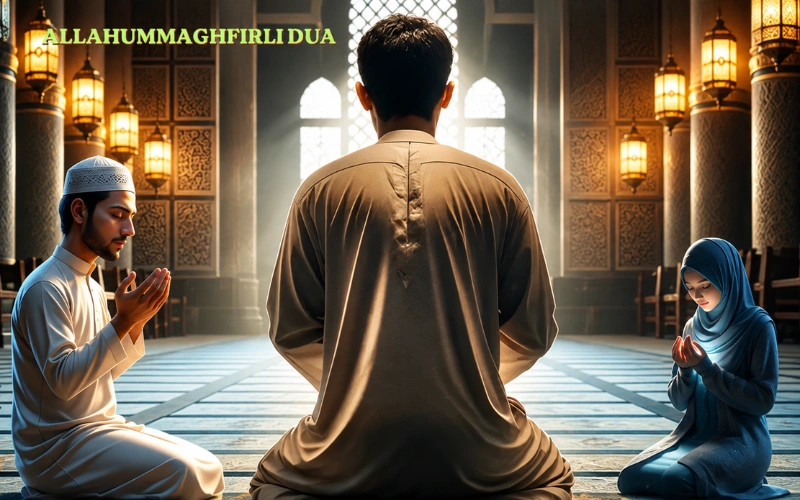
Seeking forgiveness from Allah is one of the most essential acts in a Muslim’s daily life. The Allahummaghfirli Dua is a short yet deeply powerful supplication in which a believer asks Allah Almighty for His forgiveness. This dua carries immense spiritual weight and is recommended at multiple points in a Muslim’s day including during Salah (Namaz), after making a mistake, before sleeping, and at any moment when one feels the need to seek Allah’s mercy.
The word “Allahummaghfirli” itself translates to “O Allah, forgive me.” It is a heartfelt plea to the Most Merciful, and its simplicity makes it one of the most recited phrases in Islamic worship. Whether you are a new Muslim or have been practicing for years, this dua is a constant reminder that Allah’s mercy is always near for those who sincerely repent.
Allahummaghfirli Dua in Arabic
The Allahummaghfirli Dua in Arabic text is:
اللَّهُمَّ اغْفِرْ لِي
This is the core phrase. In longer supplications, especially those reported in authentic Hadith, it is extended as:
اللَّهُمَّ اغْفِرْ لِي وَلِوَالِدَيَّ وَلِلْمُؤْمِنِينَ يَوْمَ يَقُومُ الْحِسَابُ
(O Allah, forgive me, my parents, and the believers on the Day when the reckoning is established.)
The short form اللَّهُمَّ اغْفِرْ لِي is the most commonly recited and is authentic in its use across multiple supplications in the Sunnah.
Allahummaghfirli Dua Transliteration
For those who are still learning Arabic, the Roman transliteration of the Allahummaghfirli Dua is:
Allahumma ighfir li
The extended version reads:
Allahumma ighfir li wa li walidayya wa lil mu’mineena yawma yaqumul hisab
This transliteration makes it easy for readers across all backgrounds whether they are looking for the Allahummaghfirli Dua in Hindi, Urdu, or English to pronounce it correctly and with confidence.
Allahummaghfirli Dua Meaning in English
The Allahummaghfirli Dua in English means:
“O Allah, forgive me.”
The extended version means:
“O Allah, forgive me, my parents, and the believers on the Day when the reckoning is established.”
This dua is a direct acknowledgment of human imperfection and a sincere turn toward Allah’s limitless mercy. It reflects the Islamic belief that no sin is too great for Allah to forgive, provided the believer repents with a truthful heart.
Allahummaghfirli Dua Meaning in Urdu
The Allahummaghfirli Dua in Urdu translation is:
اے اللہ! مجھے بخش دے۔
Extended version:
اے اللہ! مجھے، میرے والدین کو، اور تمام مومنوں کو اس دن بخش دے جب حساب قائم ہوگا۔
Allahummaghfirli Dua Meaning in Hindi
The Allahummaghfirli Dua in Hindi translation is:
“ऐ अल्लाह! मुझे माफ़ कर दे।”
विस्तारित अर्थ:
“ऐ अल्लाह! मुझे, मेरे माता-पिता को, और सभी ईमान वालों को उस दिन माफ़ कर दे जब हिसाब-किताब होगा।”
The Allahummaghfirli Dua in Hindi is widely searched by Urdu and Hindi-speaking Muslims in India, Pakistan, and Bangladesh who want to understand the meaning in their native language.
Explanation – Why This Dua Holds Such Importance
The Allahummaghfirli Dua is not merely a few words. It is a direct conversation between a slave and his Lord. In Islam, istighfar (seeking forgiveness) is one of the highest acts of worship. Allah says in the Quran:
“And seek forgiveness of Allah. Indeed, Allah is Forgiving and Merciful.”
The Prophet Muhammad ﷺ himself used to seek forgiveness more than seventy times a day, as recorded in Sahih Bukhari. This establishes clearly that even the most righteous among creation made istighfar a daily habit not out of major sin, but out of humility before Allah and constant awareness of His greatness.
The Allahummaghfirli Dua is among the simplest yet most powerful forms of istighfar. When recited with sincerity, it serves as a shield against the weight of sins and brings the heart closer to peace and serenity.
Allahummaghfirli Dua in Namaz – When It Is Read During Prayer
One of the most important places this dua is recited is in Salah (Namaz). The Allahummaghfirli Dua in Namaz is read during the Ruku (bowing position) as part of longer supplications, and more specifically during the Sujood (prostration) as the Prophet ﷺ encouraged believers to make dua abundantly while in prostration.
There is also an authentic narration where the Prophet ﷺ recited this phrase during the pauses between the two prostrations (Jalsah). In Sunan Abu Dawood and other collections, it is reported that the Prophet ﷺ would say:
“Allahumma ighfir li, warhamni, wajburni, wahdinni, wa ‘afinee, warzuqni”
(O Allah, forgive me, have mercy on me, strengthen me, guide me, grant me well-being, and provide for me.)
So the Allahummaghfirli Dua in Namaz is recited in the sitting position between the two sajdahs, making it a recommended Sunnah to include during every rak’ah of prayer.
Disclaimer: All duas and Islamic information provided on this page are taken from authentic sources, including the Quran and reliable Hadith collections such as Sahih Bukhari, Sahih Muslim, Sunan Abu Dawood, and Sunan Ibn Majah. Every effort has been made to ensure the accuracy of the Arabic text, transliterations, and translations.
When to Read the Allahummaghfirli Dua
This dua is not restricted to a single time or occasion. Below are the key moments when reciting the Allahummaghfirli Dua is especially recommended:
1. During Salah (Namaz) Specifically in the Jalsah (sitting between two prostrations) as part of the Sunnah supplication.
2. After Making a Sin or Mistake Immediately after realizing one has sinned, reciting this dua with a sincere heart is an act of repentance that Allah loves.
3. In the Last Third of the Night Allah descends (in a manner befitting His Majesty) to the lowest heaven in the last third of the night and calls out: “Who is seeking forgiveness so I may forgive him?” (Sahih Bukhari). This is the best time to recite the Allahummaghfirli Dua.
4. After Every Salah Many scholars recommend reciting istighfar three times after completing each prayer, which may include this dua.
5. Before Sleeping Reciting seeking-forgiveness duas before sleep ensures that if one were to pass away in that state, they would be in a state of repentance.
6. Any Time Throughout the Day There is no restriction. Allah’s door of forgiveness is always open, and this dua can be read at any moment.
Benefits of the Allahummaghfirli Dua
The spiritual and worldly benefits of regularly reciting the Allahummaghfirli Dua are well-established through Quranic verses and authentic Hadiths:
1. Sins Are Forgiven Allah has promised in the Quran and through the words of His Prophet ﷺ that He forgives those who sincerely seek forgiveness. No sin is too great for Allah’s mercy.
2. The Heart Finds Peace Carrying the weight of guilt and sin can burden the heart. Regular istighfar lifts that weight and replaces anxiety with tranquility.
3. Blessings Are Increased Prophet Nuh (عليه السلام) told his people: “Ask forgiveness of your Lord. Indeed, He is ever a Perpetual Forgiver. He will send [rain from] the sky upon you in [continuing] showers and give you increase in wealth and children and provide for you gardens and provide for you rivers.”
4. Protection from Calamities Allah said: “And Allah would not punish them while they seek forgiveness.” (Al-Anfal 8:33). Regular recitation of this dua acts as a protection from Allah’s punishment.
5. Drawing Closer to Allah Every time a believer recites the Allahummaghfirli Dua, it strengthens the bond between the servant and their Creator, cultivating humility, gratitude, and love for Allah.
6. Continuous Reward According to Islamic teachings, every letter of a dua recited with a pure intention carries reward. The simple phrase “Allahumma ighfir li” earns the believer countless good deeds.
Read Also: Innallaha Ma Sabireen
Conclusion
The Allahummaghfirli Dua is a timeless supplication that every Muslim young or old, new or experienced should make part of their daily life. Its words are simple, its meaning is profound, and its reward is immense. Whether recited during Namaz, in the quiet of the night, or in a moment of regret after a mistake, this dua reflects the beautiful relationship between a humble servant and the Most Forgiving Lord.
Allah’s mercy is vast beyond measure. He loves those who return to Him repeatedly, no matter how many times they stumble. Make the Allahummaghfirli Dua a habit let it be on your lips in the morning, during prayer, and before you close your eyes at night. In those few words lies a path to peace, purification, and closeness to Allah ﷺ.
May Allah accept our duas, forgive our sins, and shower His mercy upon us and our families. Ameen.
? Frequently Asked Questions
Q1. What does Allahummaghfirli mean?
It means “O Allah, forgive me.” It is a short supplication asking Allah for His forgiveness.
Q2. Where is Allahummaghfirli Dua read in Namaz?
It is read in the Jalsah the sitting position between the two sajdahs (prostrations) during each rak’ah of prayer.
Q3. Is this dua from the Quran or Hadith?
It is from authentic Hadith. It is recorded in Sunan Abu Dawood, Sunan Ibn Majah, and other reliable collections.
Q4. How many times should this dua be recited?
There is no fixed number. Reciting it at least three times after each Salah and throughout the day is a blessed practice.
Q5. Can this dua be recited for parents?
Yes. The extended version “Allahumma ighfir li wa li walidayya” includes a prayer for the forgiveness of parents as well.
Q6. Can this dua be read at any time?
Yes. There is no restriction on time. It can be recited at any moment of the day or night, especially in the last third of the night.
Written by: Ahmad Raza
Credentials: Islamic Studies Content Writer
 Read More duas for daily life at Islamic Dua Hub