Islamic prayers hold a special place in the hearts of believers, guiding them towards peace, forgiveness, and spiritual connection. Among the many beautiful duas (supplications), Dua Allahumma Innaka Afuwwun stands out as a powerful plea for Allah’s mercy and forgiveness. This dua is often recited especially during the holy nights of Ramadan and other occasions when seeking Allah’s pardon.
In this blog post, you will find the full Arabic text, Hindi translation, Roman Urdu transliteration, and a detailed explanation of the dua. Additionally, we will share how and when to recite it, along with tips for memorization and the benefits it brings according to Islamic teachings.
The Importance of Allahumma Innaka Afuwwun Dua in Daily Life
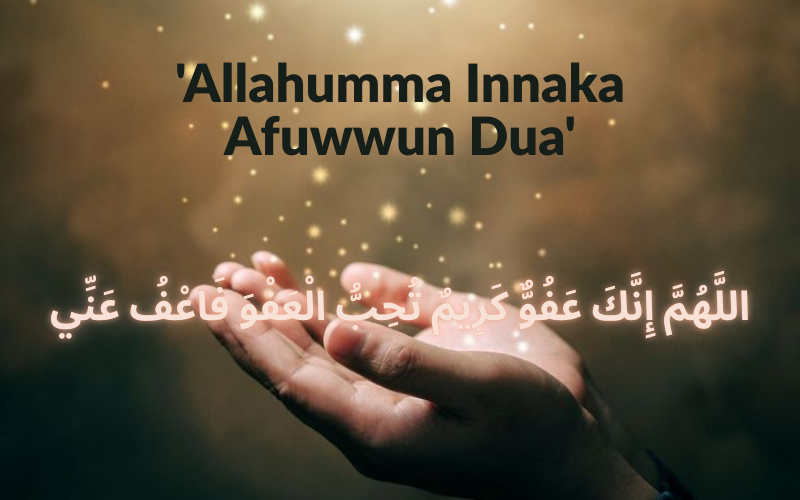
Allahumma Innaka Afuwwun dua is a heartfelt plea to Allah for pardon and cleansing of sins. The word Afuwwun (العفو) refers to the one who pardons and erases sins entirely, not just covering or forgiving them. This dua reflects humility, hope, and the deep desire for Allah’s mercy.
The Prophet Muhammad (PBUH) encouraged its recitation during Laylat al-Qadr (the Night of Decree), a night better than a thousand months, emphasizing how Allah’s mercy is immense and accessible to those who sincerely seek it.
Arabic Text, Hindi Translation, and Roman Urdu Transliteration
| Format | Text |
|---|---|
| Arabic | اللَّهُمَّ إِنَّكَ عَفُوٌّ كَرِيمٌ تُحِبُّ الْعَفْوَ فَاعْفُ عَنِّي |
| Hindi Translation | अल्लाहुम्मा इन्नका अफुवुन करीम, तुहिब्बुल-अफ्वा फा’फु अन्नी |
| Roman Urdu | Allahumma innaka ‘afuwwun kareem, tuhibbul-‘afwa fa’fu ‘annee |
Detailed Meaning and Explanation
-
اللَّهُمَّ (Allahumma): O Allah
-
إِنَّكَ (Innaka): Indeed You are
-
عَفُوٌّ (Afuwun): The Pardoner, the One who erases sins completely
-
كَرِيمٌ (Kareem): The Most Generous and Noble
-
تُحِبُّ الْعَفْوَ (Tuhibbul-afwa): You love forgiveness
-
فَاعْفُ عَنِّي (Fa’fu ‘annee): So pardon me
This dua beautifully conveys that Allah not only forgives but completely erases sins, and it expresses the believer’s request to be granted this mercy. It recognizes Allah’s generosity and His love for forgiving His servants.
When and How to Recite Allahumma Innaka Afuwwun Dua
Best Times to Recite:
-
During Laylat al-Qadr: According to Hadith, the Prophet Muhammad (PBUH) recommended this dua specifically on the last ten nights of Ramadan, especially during the odd nights.
-
After Salah (prayers): It is beneficial to ask for forgiveness regularly after daily prayers.
-
Anytime seeking forgiveness: Whenever feeling the need for mercy and pardon from Allah.
How to Recite:
-
Begin with Tahara (state of purity) by performing Wudu (ablution).
-
Find a quiet place to focus your heart and mind.
-
Recite the dua slowly, reflecting on each word and its meaning.
-
Ask sincerely for Allah’s pardon with humility and hope.
-
You may repeat the dua multiple times, especially during the blessed nights of Ramadan.
Benefits of Reciting Allahumma Innaka Afuwwun Dua
-
Invokes Allah’s Mercy: Reminds Allah of His attribute of being the Most Forgiving and the Most Generous.
-
Erases Sins: Seeks complete erasure of sins, not just forgiveness.
-
Brings Peace: Offers tranquility and peace to the heart, knowing Allah’s mercy is vast.
-
Strengthens Faith: Encourages sincerity and hope, two vital components of iman (faith).
-
Recommended by the Prophet: Following the Sunnah by reciting this dua enhances spiritual rewards.
Tips for Memorization
-
Break it down: Learn the dua in small parts — start with “Allahumma Innaka Afuwwun” then add the rest.
-
Use repetition: Repeat the dua several times a day, especially during prayer times or before sleeping.
-
Write it down: Writing the Arabic and its transliteration helps in memorizing the words and pronunciation.
-
Listen to recitations: Hearing the dua recited by scholars or native speakers can improve pronunciation and retention.
-
Understand the meaning: Connecting emotionally with the meaning makes memorization easier and more meaningful.
Conclusion
The Allahumma Innaka Afuwwun dua is a simple yet powerful prayer that connects the believer directly to Allah’s mercy. Its recitation brings hope, forgiveness, and peace to the heart. By understanding its meaning and practicing its recitation regularly, every Muslim can enrich their spiritual journey and draw closer to Allah’s boundless kindness.
May this dua become a cherished part of your daily prayers and Ramadan nights, filling your heart with peace and your soul with divine mercy.
FAQ Section
Q1: What does Allahumma Innaka Afuwwun mean?
It means “O Allah, indeed You are Pardoning, Generous, You love to pardon, so pardon me.” It is a dua asking Allah for forgiveness and mercy.
Q2: Is it necessary to say this dua in Arabic?
While Arabic is preferred, especially for prayers, you can say it in any language as long as you understand the meaning and feel sincere.
Q3: When is the best time to recite this dua?
The best time is during the last ten nights of Ramadan, particularly Laylat al-Qadr. However, it can be recited any time when seeking forgiveness.
Q4: Can this dua erase major sins?
Yes, sincere repentance and asking for forgiveness using this dua can lead to erasure of sins, as Allah’s mercy is boundless.
Q5: How many times should I recite this dua?
There is no fixed number, but repeating it multiple times with focus and sincerity, especially during special nights, is recommended.
🏡🛡️ Rabbi Inni Lima Anzalta Dua 📿✨ – Seek Allah’s blessings 🌟, mercy 🕊️, and guidance 💫 by reciting this heartfelt dua 🙏🌸. Strengthen your faith 💚, protect your journey 🚶♂️🔒, and invite divine barakah 🌿🌈 in all you do – A powerful reminder to connect with the Creator 💫🕌 – Don’t forget to share! 📜❤️