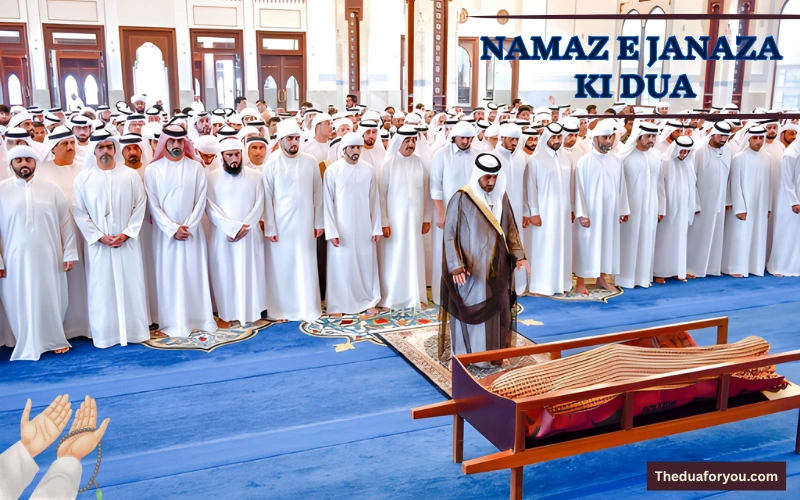
Full Namaz e Janaza Ki Dua is a vital act of worship in Islam, guiding us in offering mercy and prayers for our departed brothers and sisters. Death is the one reality every soul must face — “Kullu nafsin za’iqatul mawt” (Every soul shall taste death – Qur’an 3:185). Yet, Islam provides a clear path even in these moments of grief. The Namaz e Janaza is more than a farewell; it is a spiritual gift, a prayer for forgiveness, peace, and eternal Jannah for the deceased.
In every Takbeer and every heartfelt dua, we express our hopes for mercy and salvation. But how is this sacred prayer performed correctly? What is the Full Namaz e Janaza ka tarika, the proper niyat, and the authentic duas for a man, woman, or child?
If you’ve ever stood in a Janaza prayer and quietly wondered what to do next, this complete guide will answer every question. Together, we will explore the steps of this noble prayer and understand the Namaz e Janaza ki dua exactly as taught by our beloved Prophet ﷺ.
Importance of Namaz e Janaza
The Namaz e Janaza is a Farz-e-Kifayah — a collective obligation. This means that if some Muslims from the community perform it, the duty is lifted from the rest. However, if no one performs it, all are accountable.
The Prophet Muhammad ﷺ said:
“Whoever attends a funeral until the prayer is offered will have a reward equal to one Qirat, and whoever attends until the burial is completed will have a reward equal to two Qirats.”
(Sahih Bukhari – 47:60)
Each Qirat is said to be as large as Mount Uhud — showing the immense reward for performing this noble act.
Namaz e Janaza Ka Tarika (Method of Funeral Prayer)
The Namaz e Janaza consists of four Takbeers (saying Allahu Akbar four times) without Ruku (bowing) or Sujood (prostration). The prayer is offered standing only.
Step-by-Step Method:
Before Starting: Niyat (Intention)
As mentioned earlier, make the intention in your heart to offer Namaz e Janaza for the deceased Muslim for the sake of Allah.
-
For male:
نَوَيْتُ أَنْ أُصَلِّيَ عَلَى هٰذَا الْمَيِّتِ أَرْبَعَ تَكْبِيرَاتٍ فَرْضَ الْكِفَايَةِ لِلّٰهِ تَعَالٰى
Nawaitu an usalliya ‘ala haazal mayyiti arba’a takbeeraatin farzal kifayati lillahi ta‘ala. -
For female:
نَوَيْتُ أَنْ أُصَلِّيَ عَلَى هٰذِهِ الْمَيِّتَةِ أَرْبَعَ تَكْبِيرَاتٍ فَرْضَ الْكِفَايَةِ لِلّٰهِ تَعَالٰى
Nawaitu an usalliya ‘ala haazihi al-mayyitati arba’a takbeeraatin farzal kifayati lillahi ta‘ala.
Takbeer No. 1 – First Takbeer
-
Raise hands to your ears and say:
اللّٰهُ أَكْبَرُ (Allahu Akbar) -
Fold hands (as in normal prayer).
-
Recite Sana (Subhanak Allahumma) — praising Allah.
Arabic:
سُبْحَانَكَ اللَّهُمَّ وَبِحَمْدِكَ، وَتَبَارَكَ اسْمُكَ، وَتَعَالَى جَدُّكَ، وَلَا إِلٰهَ غَيْرُكَRoman English:
Subhanak Allahumma wa bihamdika wa tabarakasmuka wa ta‘ala jadduka wa la ilaha ghayruka.Meaning:
“Glory be to You, O Allah, and praise be to You; blessed is Your name, exalted is Your majesty, and there is no god but You.”
Takbeer No. 2 – Second Takbeer
-
Say Allahu Akbar (hands are not raised after the first Takbeer).
-
Recite Durood-e-Ibrahimi (Salawat) as in normal Salah:
Arabic:
اَللّٰهُمَّ صَلِّ عَلَىٰ مُحَمَّدٍ وَعَلَىٰ آلِ مُحَمَّدٍ، كَمَا صَلَّيْتَ عَلَىٰ إِبْرَاهِيمَ وَعَلَىٰ آلِ إِبْرَاهِيمَ، إِنَّكَ حَمِيدٌ مَجِيدٌ.
اَللّٰهُمَّ بَارِكْ عَلَىٰ مُحَمَّدٍ وَعَلَىٰ آلِ مُحَمَّدٍ، كَمَا بَارَكْتَ عَلَىٰ إِبْرَاهِيمَ وَعَلَىٰ آلِ إِبْرَاهِيمَ، إِنَّكَ حَمِيدٌ مَجِيدٌ.Roman English:
Allahumma salli ‘ala Muhammadin wa ‘ala aali Muhammad, kama sallayta ‘ala Ibraheema wa ‘ala aali Ibraheem, innaka Hameedun Majeed.
Allahumma barik ‘ala Muhammadin wa ‘ala aali Muhammad, kama barakta ‘ala Ibraheema wa ‘ala aali Ibraheem, innaka Hameedun Majeed.Meaning:
“O Allah, send blessings upon Muhammad and upon the family of Muhammad as You sent blessings upon Ibrahim and the family of Ibrahim. Indeed, You are Praiseworthy, Glorious. O Allah, bless Muhammad and the family of Muhammad as You blessed Ibrahim and the family of Ibrahim. Indeed, You are Praiseworthy, Glorious.”
Takbeer No. 3 – Third Takbeer
-
Say Allahu Akbar, again without raising hands.
-
Recite the Namaz e Janaza ki Dua, which differs slightly for adult male/female and for child.
Fourth Takbeer:
-
Say Allahu Akbar for the fourth time (no recitation after this).
-
Make a brief pause — some scholars recommend silently making dua for all Muslims.
For example, you may say:اللَّهُمَّ لَا تَحْرِمْنَا أَجْرَهُ وَلَا تَفْتِنَّا بَعْدَهُ وَاغْفِرْ لَنَا وَلَهُ
Allahumma la tahrimna ajrahu wa la taftinna ba’dahu waghfir lana walahu
(O Allah, do not deprive us of his reward, do not test us after him, and forgive us and him). -
Then end the prayer with Salam to both sides:
-
السَّلَامُ عَلَيْكُمْ وَرَحْمَةُ اللّٰهِ
(Assalamu ‘alaikum wa rahmatullah)
-
Full Namaz e Janaza Ki Dua (For Adult Male or Female)
The most authentic Namaz e Janaza ki Dua is reported from Sunan Abu Dawood (No. 3199) and Sahih Muslim (No. 963):
اللَّهُمَّ اغْفِرْ لِحَيِّنَا وَمَيِّتِنَا، وَشَاهِدِنَا وَغَائِبِنَا، وَصَغِيرِنَا وَكَبِيرِنَا، وَذَكَرِنَا وَأُنْثَانَا. اللَّهُمَّ مَنْ أَحْيَيْتَهُ مِنَّا فَأَحْيِهِ عَلَى الْإِسْلَامِ، وَمَنْ تَوَفَّيْتَهُ مِنَّا فَتَوَفَّهُ عَلَى الْإِيمَانِ. اللَّهُمَّ لَا تَحْرِمْنَا أَجْرَهُ، وَلَا تُضِلَّنَا بَعْدَهُ.
Roman English:
Allahummaghfir lihayyina wa mayyitina, wa shahidina wa gha’ibina, wa sagheerina wa kabeerina, wa dhakarina wa unthana. Allahumma man ahyaytahu minna fa ahyihi ‘alal-Islam, wa man tawaffaytahu minna fatawaffahu ‘alal-iman. Allahumma la tahrimna ajrahu, wa la tudhillana ba’dahu.
Meaning:
“O Allah, forgive our living and our dead, those present and those absent, our young and our old, our males and our females. O Allah, the one whom You keep alive, keep him alive upon Islam, and the one whom You cause to die, cause him to die upon faith. O Allah, do not deprive us of his reward and do not let us go astray after him.”
This is the main Namaz e Janaza ki dua used for both males and females.
Full Namaz e Janaza Ki Dua for Male
For a male, the same dua is recited as mentioned above. However, in some traditions, an additional supplication may be added:
اللَّهُمَّ اغْفِرْ لَهُ، وَارْحَمْهُ، وَعَافِهِ، وَاعْفُ عَنْهُ، وَأَكْرِمْ نُزُلَهُ، وَوَسِّعْ مُدْخَلَهُ، وَاغْسِلْهُ بِالْمَاءِ وَالثَّلْجِ وَالْبَرَدِ، وَنَقِّهِ مِنَ الْخَطَايَا كَمَا يُنَقَّى الثَّوْبُ الْأَبْيَضُ مِنَ الدَّنَسِ، وَأَبْدِلْهُ دَارًا خَيْرًا مِنْ دَارِهِ، وَأَهْلًا خَيْرًا مِنْ أَهْلِهِ، وَزَوْجًا خَيْرًا مِنْ زَوْجِهِ، وَأَدْخِلْهُ الْجَنَّةَ، وَأَعِذْهُ مِنْ عَذَابِ الْقَبْرِ وَمِنْ عَذَابِ النَّارِ.
(Sahih Muslim, 963)
Meaning:
“O Allah, forgive him, have mercy on him, grant him well-being, pardon him, honor his place of rest, expand his grave, wash him with water, snow, and ice, cleanse him of sins as a white garment is cleansed of dirt. Replace his home with a better home, his family with a better family, and his spouse with a better spouse. Admit him to Paradise and protect him from the punishment of the grave and the fire.”
Full Namaz e Janaza Ki Dua for Female
When the deceased is a female, the pronouns in the above dua are changed accordingly:
اللَّهُمَّ اغْفِرْ لَهَا، وَارْحَمْهَا، وَعَافِهَا، وَاعْفُ عَنْهَا، وَأَكْرِمْ نُزُلَهَا، وَوَسِّعْ مُدْخَلَهَا، وَاغْسِلْهَا بِالْمَاءِ وَالثَّلْجِ وَالْبَرَدِ، وَنَقِّهَا مِنَ الْخَطَايَا كَمَا يُنَقَّى الثَّوْبُ الْأَبْيَضُ مِنَ الدَّنَسِ، وَأَبْدِلْهَا دَارًا خَيْرًا مِنْ دَارِهَا، وَأَهْلًا خَيْرًا مِنْ أَهْلِهَا، وَزَوْجًا خَيْرًا مِنْ زَوْجِهَا، وَأَدْخِلْهَا الْجَنَّةَ، وَأَعِذْهَا مِنْ عَذَابِ الْقَبْرِ وَمِنْ عَذَابِ النَّارِ.
Full Namaz e Janaza Ki Dua for Child
When a child (who has not reached the age of maturity) passes away, the dua changes because the child is free from sins. Hence, we pray for mercy and reward for the parents.
اللَّهُمَّ اجْعَلْهُ لَنَا فَرَطًا، وَسَلَفًا، وَأَجْرًا، وَذُخْرًا. اللَّهُمَّ ثَقِّلْ بِهِ مَوَازِينَنَا، وَأَعْظِمْ بِهِ أُجُورَنَا، وَأَلْحِقْهُ بِصَالِحِ الْمُؤْمِنِينَ، وَاجْعَلْهُ فِي كَفَالَةِ إِبْرَاهِيمَ، وَقِهِ بِرَحْمَتِكَ عَذَابَ الْجَحِيمِ.
(Reported in Ibn Majah and Musnad Ahmad)
Meaning:
“O Allah, make him for us a forerunner, a source of reward and treasure. O Allah, make him a means to weigh our scales heavily (with good deeds) and make him among the righteous believers. Place him under the care of Ibrahim (A.S.) and protect him, by Your mercy, from the torment of the Fire.”
Read Also: Bukhar Ki Dua for Child
Key Points to Remember
-
The Namaz e Janaza has no Ruku or Sujood.
-
It is performed standing only.
-
The Imam stands at the chest of the deceased male, and at the middle of the deceased female.
-
It should be performed as soon as possible after preparation of the body.
-
The dua is different for adults and children.
Most Related Duas
Here are some other important duas related to death and funeral occasions:
1. Dua for the Deceased (General):
اللَّهُمَّ اغْفِرْ لِمُسْلِمِينَ وَالْمُسْلِمَاتِ، وَالْمُؤْمِنِينَ وَالْمُؤْمِنَاتِ، الأَحْيَاءِ مِنْهُمْ وَالأَمْوَاتِ
Allahummaghfir lil-muslimeena wal-muslimaat, wal-mu’mineena wal-mu’minaat, al-ahyaa’i minhum wal-amwaat.
2. Dua When Visiting a Grave:
السَّلَامُ عَلَيْكُمْ أَهْلَ الدِّيَارِ مِنَ الْمُؤْمِنِينَ وَالْمُسْلِمِينَ، وَإِنَّا إِنْ شَاءَ اللَّهُ بِكُمْ لَاحِقُونَ
Assalamu ‘alaikum ahlad-diyaari minal-mu’mineena wal-muslimeen, wa inna in sha’ Allahu bikum laahiqoon.
Disclaimer: All information about Namaz e Janaza ki Dua in this article is sourced from authentic Islamic references. It is shared for educational purposes only. For specific religious rulings, please consult a qualified Islamic scholar.
Conclusion
The Namaz e Janaza ki dua is far more than words — it’s a bridge between this world and the next, a believer’s final act of compassion. Every Takbeer carries hope, every dua carries mercy, and every Salam marks our prayer for eternal peace. When performed with knowledge and sincerity, this prayer becomes a powerful expression of faith, love, and unity in the Ummah.
So, the next time you stand in a Janaza, let your heart be present, your intention pure, and your words filled with remembrance. Because one day, others will stand for us — whispering the same sacred Namaz e Janaza ki dua, seeking the same mercy from Allah that we once sought for others.
? Frequently Asked Questions (FAQs)
1. How many Takbeers are there in Namaz e Janaza?
There are four Takbeers in Namaz e Janaza — each with specific recitations after the first three.
2. Can Namaz e Janaza be offered in absentia (Salat al-Ghaib)?
Yes, it can be performed if the deceased’s body is not present, following the Sunnah of the Prophet ﷺ who offered Janaza in absentia for Najashi, the King of Abyssinia.
3. Can women attend Namaz e Janaza?
Yes, women can attend the Janaza prayer, but they should maintain modesty and decorum, as practiced during the Prophet’s time.
4. Is Namaz e Janaza valid without Wudu?
No, like all prayers, Wudu (ablution) is necessary before performing Namaz e Janaza.
5. What if someone joins the prayer late?
If a person joins after the Imam has completed one or more Takbeers, he should complete the remaining Takbeers after the Imam says Salam.
6. Can Namaz e Janaza be offered at night?
Yes, it can be offered anytime except during prohibited hours (sunrise, sunset, and midday).
7. Is Namaz e Janaza the same for all adults?
Yes, the same dua and method apply to all adult Muslims, whether male or female, with minor changes in gender pronouns in the dua.