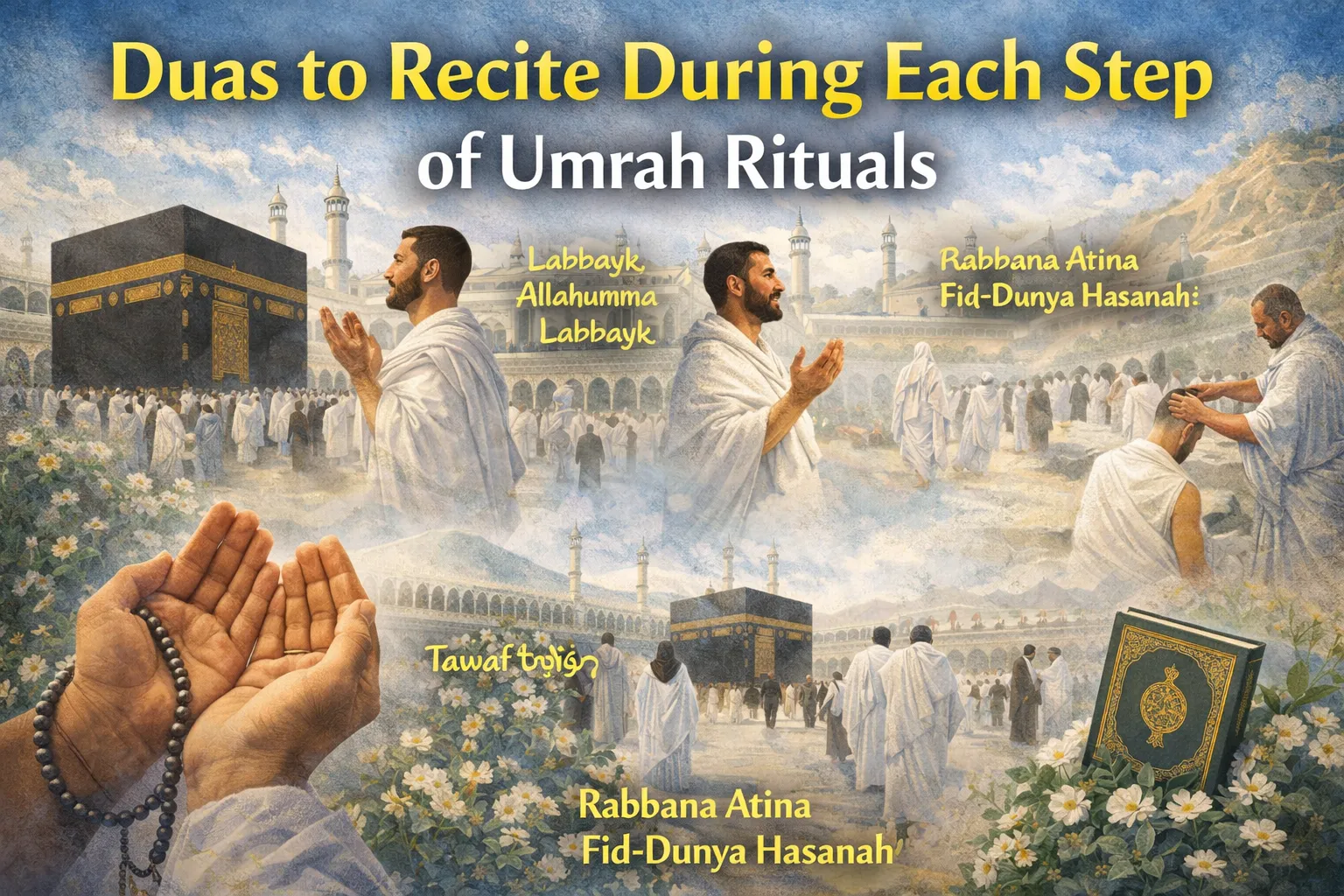
Umrah is a beautiful spiritual journey that brings Muslims closer to Allah and allows them to purify their hearts through worship and remembrance. Every step of Umrah—from entering the state of Ihram to completing Tawaf and Sa’i—contains moments filled with supplication and reflection. Reciting authentic duas during these sacred rituals helps pilgrims stay spiritually connected and mindful of the purpose of their journey. For Muslims in the UK preparing for this blessed pilgrimage, understanding the duas associated with each step of Umrah can make the experience even more meaningful.
Many Muslims begin preparing for Umrah months in advance, both spiritually and practically. Along with learning the rituals and recommended supplications, pilgrims often arrange their travel through trusted providers offering Umrah Packages 2026 that help make the journey smooth and organized. While travel arrangements are important, spiritual preparation—such as memorizing essential duas and understanding their meanings—is equally valuable for gaining the full blessings of Umrah.
Entering the State of Ihram
The first step of Umrah begins with entering the state of Ihram at the designated Miqat. Pilgrims perform ghusl (ritual purification), wear the Ihram garments, and make the intention (niyyah) for Umrah.
The intention is made in the heart, and it is recommended to say:
“Labbayka Allahumma Umrah.”
(O Allah, here I am to perform Umrah.)
After making the intention, pilgrims begin reciting the Talbiyah frequently:
“Labbayka Allahumma Labbayk, Labbayka La Sharika Laka Labbayk, Innal Hamda Wan Ni‘mata Laka Wal Mulk, La Sharika Lak.”
This powerful declaration expresses complete submission to Allah and is repeated until reaching the Kaaba.
Entering Masjid al-Haram
When pilgrims first see the Kaaba, it is a deeply emotional and spiritual moment. It is recommended to enter the mosque with humility and recite the dua commonly said when entering any mosque:
“Allahumma Iftah Li Abwaba Rahmatik.”
(O Allah, open for me the doors of Your mercy.)
Many scholars also encourage pilgrims to make personal duas at the first sight of the Kaaba, as it is a special moment when supplications are accepted.
Duas During Tawaf
Tawaf is performed by circling the Kaaba seven times in a counterclockwise direction. Each round represents devotion, unity, and submission to Allah.
While there is no specific dua required for every round, pilgrims are encouraged to recite various supplications from the Qur’an and Sunnah. One commonly recited dua between the Yemeni Corner and the Black Stone is:
“Rabbana Atina Fid-Dunya Hasanah Wa Fil-Akhirati Hasanah Wa Qina ‘Adhaban-Nar.”
(Our Lord, give us good in this world and good in the Hereafter and protect us from the punishment of the Fire.)
(Qur’an 2:201)
Pilgrims may also recite dhikr such as SubhanAllah, Alhamdulillah, and Allahu Akbar while making personal supplications for themselves, their families, and the entire Ummah.
Duas During Sa’i (Safa and Marwah)
After Tawaf, pilgrims perform Sa’i by walking seven times between the hills of Safa and Marwah. This ritual commemorates the patience and trust of Hajar (AS) as she searched for water for her son Ismail (AS).
When reaching Safa, pilgrims may recite the verse:
“Inna As-Safa Wal-Marwata Min Sha‘a’irillah.”
(Indeed, Safa and Marwah are among the symbols of Allah.)
(Qur’an 2:158)
Then they raise their hands and make dua, praising Allah and sending blessings upon the Prophet ﷺ. Pilgrims can make any heartfelt supplication during this time.
Completing Umrah with Halq or Taqsir
The final step of Umrah is cutting or shaving the hair. Men usually shave their heads (Halq) or trim their hair (Taqsir), while women trim a small portion of their hair.
Although there is no specific required dua, pilgrims are encouraged to thank Allah for allowing them to complete this sacred act of worship. The Prophet ﷺ made dua three times for those who shaved their heads and once for those who trimmed their hair, highlighting the virtue of this act.
Spiritual Preparation for UK Pilgrims
For Muslims traveling from the United Kingdom, preparing for Umrah includes learning the rituals, understanding the recommended duas, and strengthening one’s intention. Pilgrims should spend time studying authentic sources from the Qur’an and Sunnah so they can perform each step correctly and with sincerity.
Many British Muslims plan their pilgrimage through trusted agencies offering Umrah Packages from Leicester, London, Birmingham, and other cities to ensure comfortable travel arrangements. However, the most important preparation remains spiritual—seeking forgiveness, increasing remembrance of Allah, and learning the supplications that enrich every stage of Umrah.
Final Thoughts
Umrah is not only a physical journey but also a deeply spiritual one. Every step—from entering Ihram to completing Tawaf and Sa’i—offers an opportunity to remember Allah and seek His mercy. By reciting authentic duas and reflecting on their meanings, pilgrims can strengthen their connection with Allah and make their Umrah truly transformative.
For UK Muslims preparing for this sacred journey, learning these supplications in advance can help ensure that every moment in Makkah is filled with gratitude, humility, and devotion. May Allah accept the Umrah of all pilgrims and grant them spiritual blessings and forgiveness. Ameen.